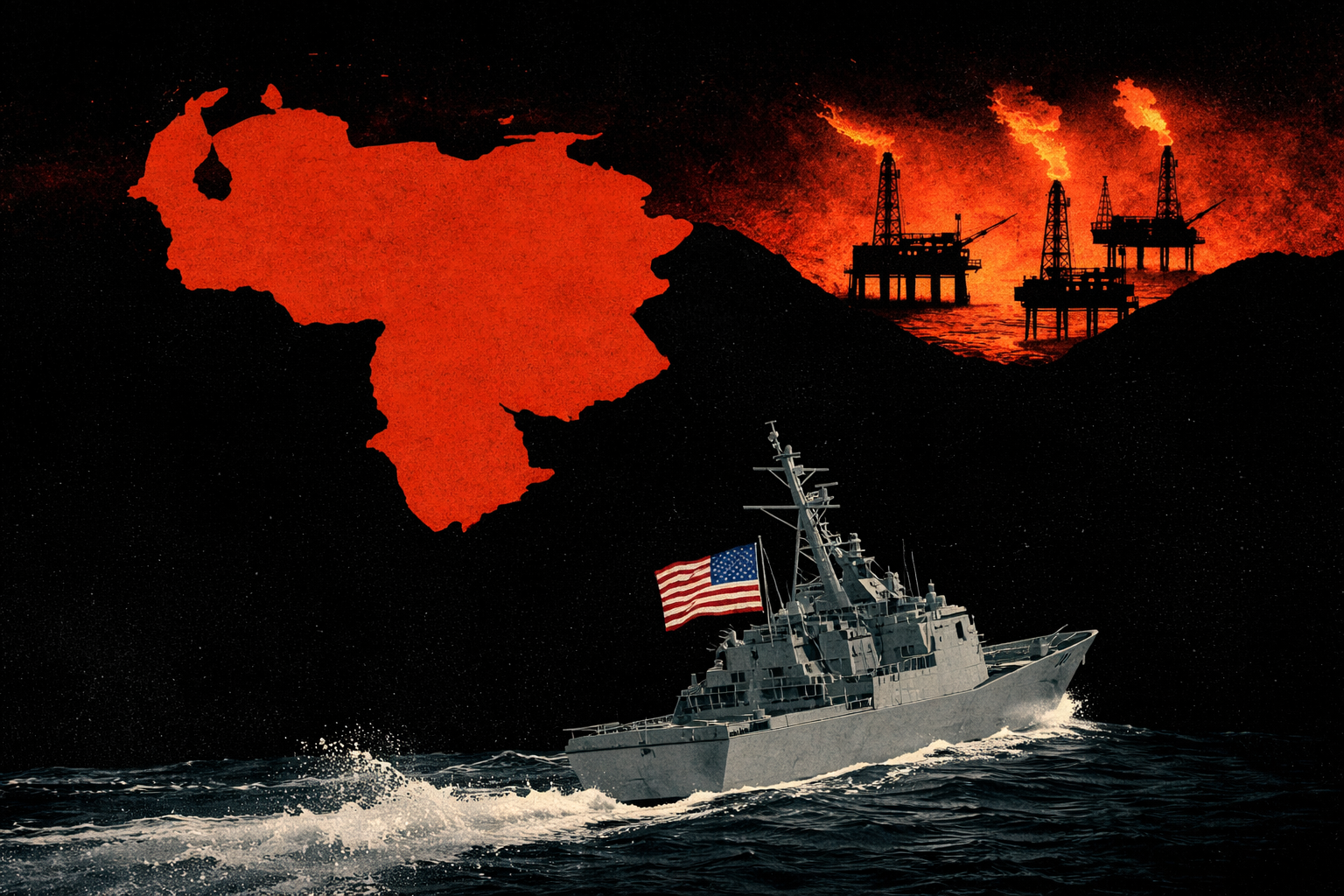
The United States is carrying out the largest military deployment in the Caribbean in decades, with the explicit aim of forcing the removal of Nicolás Maduro’s government and replacing it with a regime completely subordinated to its interests. They have transferred some of their most powerful warships, an aircraft carrier equipped with state-of-the-art planes, publicly announced CIA operations, and conducted provocative flights over Venezuelan territory.
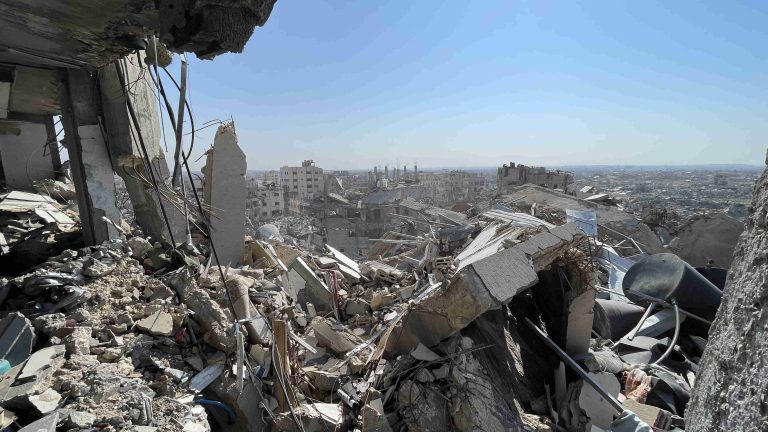
Venezuela is already subjected to a de facto air and naval blockade. The maritime siege began when the Trump administration seized a Venezuelan oil tanker in international waters under the pretext of prior sanctions and proceeded to confiscate its cargo — an act of imperialist piracy. This precedent laid the groundwork for the current escalation, formally culminating in a blockade against any oil tanker labeled as “sanctioned,” with the explicit objective of economically strangling the Venezuelan nation. Now the United States has unleashed a bombing campaign that sows destruction and terror in several urban centers, placing the civilian population at grave risk.
The Narratives of Empire and Their Exhaustion
The justification used by the U.S. government for this escalation has been erratic and utterly lacking in credibility. At first, it was claimed that Maduro was promoting an alleged U.S. “invasion” through a transnational criminal gang — the so-called Tren de Aragua — whose presence was attributed to Venezuelan migration. Later, this narrative was replaced with the accusation that the Venezuelan government was operating a supposed “Cartel of the Suns,” dedicated to drug trafficking into U.S. territory. Imperialist propaganda allows the bombing of vessels on the high seas without presenting any evidence, without due process, murdering civilians and committing war crimes that remain unpunished thanks to U.S. political and military power.
This propaganda does not withstand the slightest scrutiny. Even the DEA itself has previously acknowledged that the main flow of drugs into the United States does not pass through Venezuela. Washington’s supposed interest in combating drug trafficking is completely discredited when we recall that Trump released Juan Orlando Hernández, the former Honduran president convicted of drug trafficking, in order to intervene in his country’s elections. This adds to the long history of U.S. officials and DEA agents tried in the United States for crimes related to drug trafficking.
Unlike the “war on terror,” which managed to build an internal consensus, the narrative of the “war on drugs” no longer convinces even broad sectors of the U.S. population. Even so, the offensive continues, revealing that the real issue was never drug trafficking but political and economic control.
The Pro-Imperialist Opposition and the Announced Plunder
At the same time, imperialism has tried to position figures from the Venezuelan opposition as “democratic alternatives.” One example is María Corina Machado, promoted internationally — even through hypocritical awards and recognitions — as a defender of freedom and peace, while she openly calls for foreign military intervention.
Machado has stated bluntly that she would lead a process of massive privatization of Venezuelan state-owned enterprises, opening the country to unrestricted plunder by multinational corporations. Such a program could only be imposed through brutal repression against a population that has already suffered decades of exploitation and dispossession. It is particularly cynical that sectors of the Venezuelan diaspora support this project, even as Trump himself has eliminated migration protections and initiated mass deportations of Venezuelans.
Trump openly declares his interest in appropriating Venezuela’s oil reserves — the largest in the world — even claiming that this oil “belongs” to the United States because of its historical role in the development of the oil industry. This assertion deliberately erases the labor of hundreds of thousands of Venezuelan workers and conceals the systematic plunder carried out by U.S. companies — plunder that was precisely what led to the nationalization of oil as a popular achievement.
Maduro, Sanctions, and Inter-Imperialist Rivalry
The reality is that Maduro’s government does not represent a revolutionary break with capital. For years it has promoted gradual privatizations and repressed critical Chavista sectors, betraying the popular aspirations once mobilized by the Bolivarian process. Nonetheless, since 2017 the United States has deepened an economic war that has been a central factor in the humanitarian crisis, targeting the oil industry on which most of the foreign currency needed to import essential goods depends.
Sanctions have been extended to any company that trades with Venezuela — with one revealing exception: the U.S. oil company Chevron, which has been authorized to continue exploiting Venezuelan resources. This double standard clearly exposes the cynicism of imperialism: it is not about “human rights,” but about who controls the business.
The military threat against Venezuela — unpopular even within the United States — is part of a broader strategy to expel geopolitical rivals from the Western Hemisphere and secure control of strategic resources in the face of China’s rise. Venezuela has developed strong ties with China and Russia, and although Maduro has shown willingness to negotiate with U.S. capital, Washington seeks total obedience — something that only an openly pro-imperialist regime could guarantee.
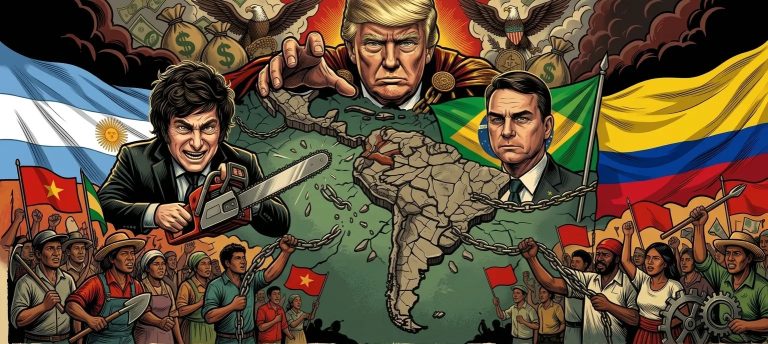
Added to this is the need to secure nearby oil supplies amid instability in the Middle East. The offensive is not limited to Venezuela: Colombia has been threatened, Trump has blatantly interfered in elections in Honduras and Argentina, and has even gone so far as to threaten Mexico with bombings.
For the Unity of the Latin American Working Class
Although Maduro’s Bonapartist regime long ago capitulated to capitalist interests and remains in power even after a deeply contested electoral process, U.S. imperialism has no interest in democracy or the freedom of Latin American peoples. Its goal is the complete subjugation of our societies to the interests of big capital.
Faced with this new phase of imperialism — which no longer even bothers to disguise its actions in the language of international law — the unity of the continent’s working class becomes essential. Only the joint struggle of Latin American peoples can confront a power that seeks to crush all forms of sovereignty, impose puppet governments, and reduce “freedom” to the mere freedom to be exploited. Allowing Venezuela to be defeated by a U.S. intervention would open the door for the same mechanism to be applied against any country in Latin America that attempts to deviate from the dominant capitalist order, strengthening local elites and enabling reactionary projects aimed at stripping working peoples of the rights historically won through struggle.
The real alternative lies neither in imperialism nor in the regimes that make deals with it, but in the independent organization of the working class to decide its own destiny and build a dignified life, free from exploitation and domination.
Yankee imperialism out of Venezuela and Latin America!
Only the organized people save the people!